
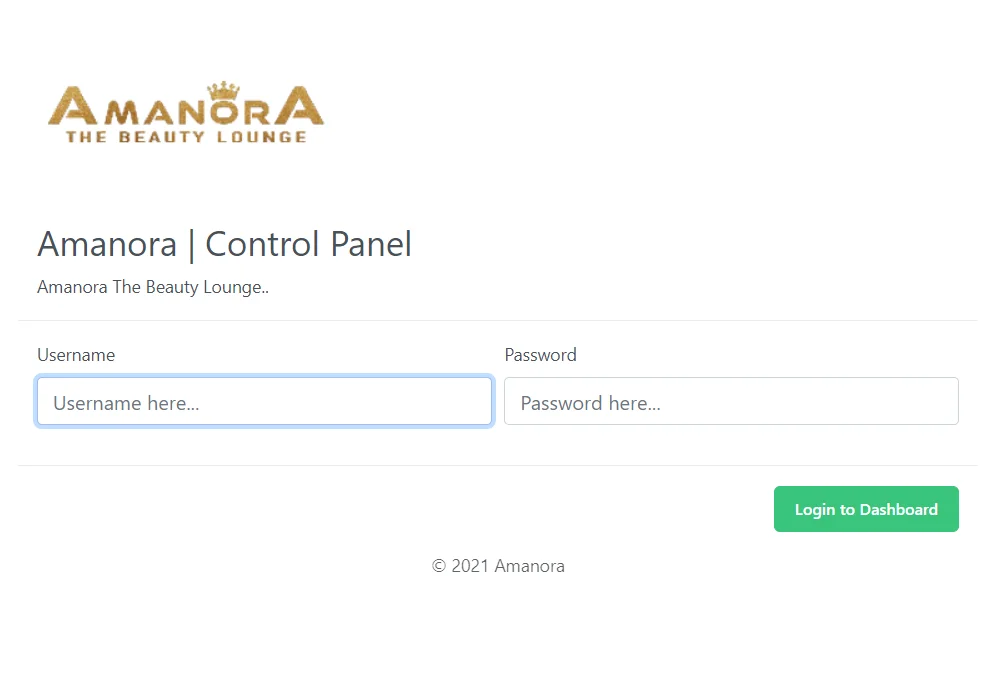
Amanora The Beauty Lounge

Gulger Mallik
Software Engineer & AI Researcher
Explore the development journey of a robust, cross-platform booking and backend system tailored for Amanora The Beauty Lounge, ensuring seamless service management.
In the competitive landscape of premium beauty and wellness services, operational efficiency and a superior customer experience are paramount. For Amanora The Beauty Lounge, a high-end establishment focused on delivering exceptional client care, the existing infrastructure needed a significant upgrade to match their service quality. This post details the development of a comprehensive, integrated appointment booking and backend management system designed to handle complex scheduling, client data, and multi-channel access.
The Challenge: Bridging Service Excellence with Digital Efficiency
Amanora The Beauty Lounge required a solution that went beyond a simple online calendar. The core challenges involved ensuring real-time synchronization across various touchpoints (web, potential mobile apps, and in-house staff terminals), managing complex service matrices (varying durations, staff specializations, and resource allocation), and providing a user interface that reflected the brand’s premium aesthetic.
- Achieving true cross-platform usability without sacrificing performance.
- Integrating reliable third-party APIs for critical functions like SMS notifications and payment processing.
- Developing a scalable backend capable of handling high transaction volumes and detailed staff/resource management.
System Architecture: Building a Scalable Foundation
The development strategy centered on a microservices-oriented architecture, prioritizing modularity, resilience, and ease of integration. This approach allowed us to deploy robust services independently while maintaining a cohesive system overall.
The Backend Core: Data Integrity and Logic
The backend was engineered using modern frameworks known for their performance and security (e.g., Node.js/Express or Python/Django, depending on specific requirements). The database layer was structured to manage several interconnected entities efficiently:
- Services Catalog: Detailed definitions including duration, prerequisite skills, and associated costs.
- Staff Profiles: Tracking specialization, working hours, and individual capacity.
- Appointment Scheduling Engine: The core logic responsible for conflict resolution, buffer time insertion, and optimal resource matching.
- Client Management (CRM Lite): Secure storage of booking history and preferences.
API Integration: Connecting the Ecosystem
The success of a modern booking system hinges on its ability to communicate seamlessly with external services. We focused on creating secure, RESTful APIs that served as the single source of truth for all system interactions.
Integrating external APIs wasn't just about linking services; it was about ensuring that every automated communication reinforced the brand’s commitment to reliability and professionalism.
- Communication APIs (e.g., Twilio integration): Enabled automated appointment confirmations, reminders (reducing no-shows significantly), and follow-up messages.
- Payment Gateways: Secure integration for deposits or full pre-payments, ensuring PCI compliance while offering flexible payment options.
- Internal Sync APIs: Designed for future integration with POS systems or internal loyalty programs, future-proofing the investment.
The Cross-Platform User Experience (UX)
A key requirement for Amanora was a truly seamless experience, whether the client booked via their desktop browser or a mobile device. This necessitated a mobile-first design philosophy implemented across the frontend.
Designing for Simplicity and Elegance
The frontend application (developed using modern JavaScript frameworks like React or Vue.js) was designed to mirror the lounge’s high-end branding. The booking flow was meticulously optimized to reduce clicks and cognitive load. For a service business, the path from 'I need an appointment' to 'Booking confirmed' must be frictionless.
- Intuitive Service Selection: Clear categorization and search functionality for quick navigation through the service menu.
- Real-Time Availability Display: Showing accurate slots based on the selected service and required staff expertise.
- Responsive Design: Ensuring perfect rendering and usability on all screen sizes, critical for on-the-go bookings.
Staff-Side Management Portal
While the client-facing side focuses on ease of booking, the staff backend required robust management tools. This portal allowed managers and reception staff to oversee the entire operational day:
- Daily/Weekly Schedule Overviews: Visual dashboards showing staff allocation and service pipeline.
- Manual Booking/Walk-Ins: Ability to quickly slot in new appointments, which automatically respects staff availability rules.
- Client Data Access: Secure access to client history for personalized service delivery.
- Service Configuration: Easy tools for administrators to update pricing, duration, and staff assignments without developer intervention.
Key Development Takeaways for Service Businesses
The project for Amanora The Beauty Lounge provided several critical insights applicable to any service-based industry looking to digitize operations, from spas to professional consulting firms.
Focus on Latency in Scheduling
In booking systems, latency is the enemy of conversion. If a user sees an available slot that disappears before they can click it, trust erodes instantly. We implemented robust locking mechanisms and optimized database queries to ensure that the displayed availability was accurate within milliseconds, crucial for a high-demand environment.
Prioritizing Notification Reliability
No-shows are a significant cost factor. By tightly integrating reliable SMS and email APIs, we established a multi-layered confirmation process. This not only improved client accountability but also freed up staff time previously spent on manual confirmation calls.
Designing for Future Modularity
Amanora may expand its services, introduce retail sales, or require integration with an internal inventory system later. By architecting the system with clear API boundaries, we ensured that adding new functionality—like linking a specific facial service to inventory depletion—could be done with minimal disruption to the core booking engine.
Conclusion: Delivering a Premium Digital Experience
The development of the Amanora The Beauty Lounge system stands as a testament to delivering scalable, mobile-ready solutions tailored for service-based businesses. By focusing equally on a polished frontend experience and a resilient, API-driven backend, we provided Amanora with the digital infrastructure necessary to support their brand reputation and streamline day-to-day operations. This project successfully translated complex scheduling requirements into a simple, reliable platform for both clients and staff.
Related Articles
Full-Stack Efficiency
Discover how to streamline your development workflow and maximize productivity by mastering the art...

Chaos of Traditional Job Hunting
Discover how an AI-powered Job Application Tracker transformed my job search, streamlining...

Visualizing Strategic Positioning
Discover how a custom React and ApexCharts app visualizes strategic differentiation using Blue...
How I used Google's Antigravity AI Tool
Explore the reality of Google's Antigravity AI tool. Discover how this powerful technology...

Building the Digital Backbone for Soil Carbon Innovation
Explore the three core technological assets powering the Tierrasphere initiative: the internal...
Ready to Build Something Amazing?
Let's collaborate on your next project and create solutions that make a difference.
Get In Touch