

The Post-IDE Era: Coding with Autonomous Agents

Gulger Mallik
Software Engineer & AI Researcher
Explore the transition from traditional IDEs to autonomous coding agents and how AI is redefining the developer's role from writer to architect.
The Shift from Tools to Teammates
For the better part of three decades, the Integrated Development Environment (IDE) has been the central nervous system of software engineering. From the early days of Turbo Pascal to the dominance of VS Code, the IDE's primary purpose was to provide a suite of tools — compilers, debuggers, and syntax highlighters — to make the manual act of writing code more efficient. However, we are now witnessing the dawn of the Post-IDE era, where the focus is shifting from tools that assist the developer to autonomous agents that act as collaborative partners.
In this new paradigm, coding is no longer just about manipulating text; it is about managing intent. Autonomous agents are moving beyond simple 'next-token' prediction to high-level reasoning, allowing them to plan, execute, and debug complex software tasks with minimal human intervention.
What Defines an Autonomous Coding Agent?
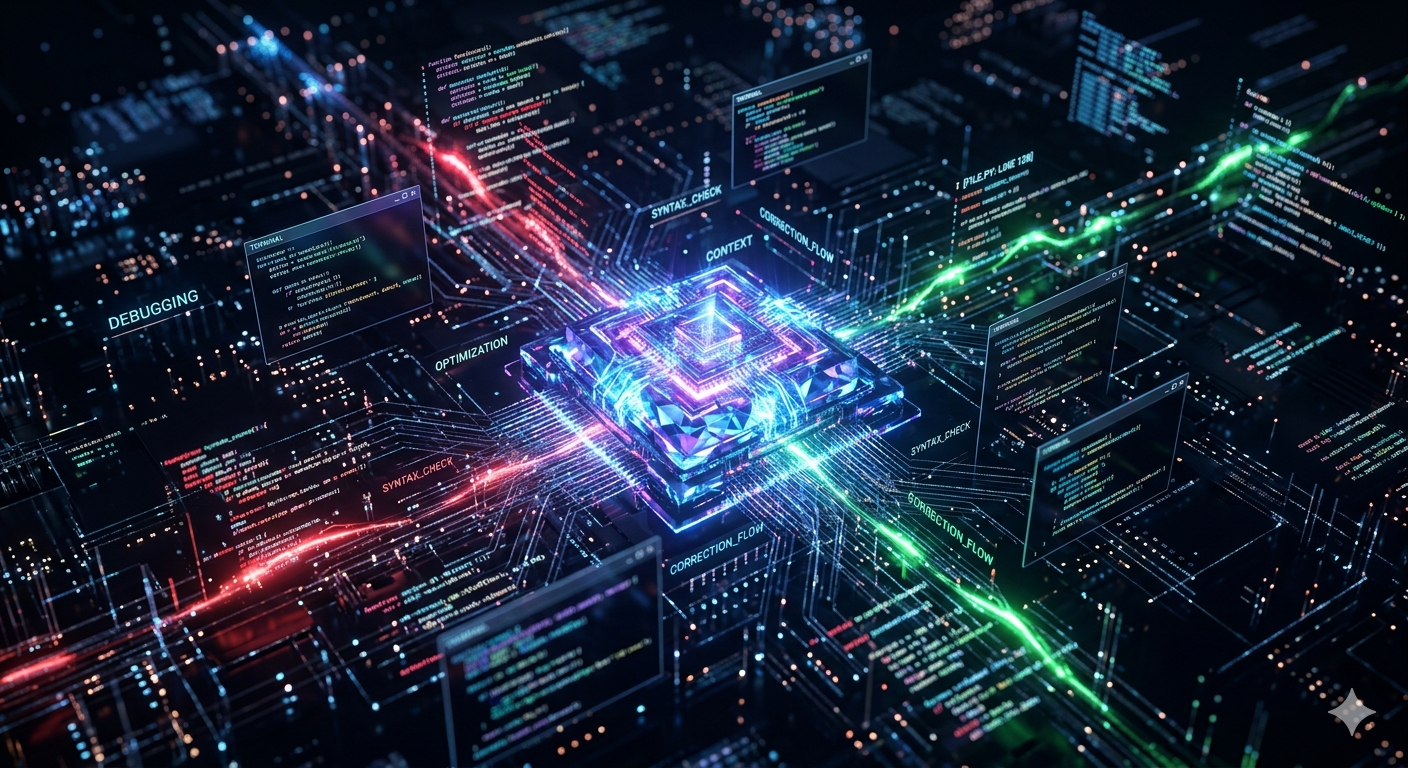
Unlike the standard autocomplete features found in early AI plugins, autonomous agents possess a higher degree of agency and context awareness. They are characterized by several key capabilities:
- Repository-Wide Context: Agents don't just look at the open file; they index the entire codebase to understand dependencies, architectural patterns, and business logic.
- Tool Integration: They can interact with terminal environments, run test suites, and read documentation from the web to solve problems.
- Self-Correction: If an agent generates code that fails a build or a test, it can analyze the error logs and attempt to fix its own mistakes autonomously.
The Emerging Stack: From Cursor to Devin
The transition to the Post-IDE era is being led by a new generation of software. Tools like Cursor, a fork of VS Code, have integrated AI so deeply into the editor that it can predict entire multi-file refactors. Meanwhile, platforms like GitHub Copilot Workspace and fully autonomous agents like Devin are moving the 'editor' to the background, focusing instead on high-level task descriptions.
The future of software engineering isn't about writing code; it's about reviewing and orchestrating the output of intelligent systems.
Practical Workflow Changes
For developers, this shift requires a change in daily habits. Instead of starting with a blank file, the workflow often begins with a 'Specification Prompt.' The developer outlines the feature or the bug fix, and the agent generates a plan. The developer then acts as a 'Reviewer-in-Chief,' checking the logic and security of the proposed changes before they are merged into the main branch.

Challenges and the Human Element
While the efficiency gains are undeniable, the Post-IDE era brings new challenges. Security is a primary concern, as agents might inadvertently introduce vulnerabilities or utilize insecure libraries. Furthermore, there is the risk of 'technical debt at scale,' where AI generates vast amounts of code that the human maintainers do not fully understand.
To thrive in this era, developers must double down on architectural knowledge and system design. While the agent handles the syntax and the boilerplate, the human must ensure that the system remains scalable, maintainable, and aligned with user needs.
Conclusion
The Post-IDE era is not about the replacement of the developer, but the evolution of the craft. By leveraging autonomous agents, we are moving toward a world where the barrier between an idea and a functional application is thinner than ever before. Embracing these tools today is no longer optional for those who wish to remain at the forefront of the industry.
Related Articles

Job Tracker AI
JobTracker AI is a smart, streamlined platform I built to organise, track, and optimise every stage...

ML for Carbon Capture and Storage
A UKRI‑funded research project with the University of Huddersfield and Terrasphere, developing...
LLM for Financial Audit
The Crowther Audit Program uses advanced NLP powered by LLM APIs to transform messy, unstructured...

The Rise of the No-Code Architect
Explore how the No-Code Architect is bridging the gap between business logic and technical...

The Rise of the AI Orchestrator
Discover how AI orchestrators are transforming simple LLMs into complex workflow managers capable...
Ready to Build Something Amazing?
Let's collaborate on your next project and create solutions that make a difference.
Get In Touch