

The Rise of the No-Code Architect

Gulger Mallik
Software Engineer & AI Researcher
Explore how the No-Code Architect is bridging the gap between business logic and technical execution, revolutionizing the speed of modern software development.
The Shift from Syntax to Systems
For decades, the barrier to entry for building software was the mastery of complex programming languages. However, the landscape is shifting. We are witnessing the rise of the No-Code Architect—a professional who focuses on system design, data flow, and user experience rather than writing lines of syntax. This role represents a fundamental change in how organizations approach digital transformation, moving away from monolithic development cycles toward agile, modular assembly.
What is a No-Code Architect?
A No-Code Architect is not simply a 'citizen developer' who builds a basic internal form. They are strategic thinkers who understand how to weave together various platforms—such as Airtable, Bubble, Zapier, and Webflow—into a cohesive, scalable ecosystem. While they may not be writing Python or Javascript daily, they must possess a deep understanding of technical concepts like database normalization, API authentication, and state management.
Architecture is not about the medium of construction; it is about the structural integrity and functional harmony of the system being built.
Core Responsibilities and Skills
The No-Code Architect occupies the space between the business stakeholder and the traditional IT department. Their primary responsibilities include:
- Tool Selection: Evaluating the vast ecosystem of no-code tools to find the right fit for specific security, scalability, and budget requirements.
- Data Modeling: Designing relational databases that ensure data integrity and can be easily queried or integrated with external services.
- Workflow Automation: Mapping out complex business processes and translating them into automated triggers and actions across multiple platforms.
- Governance and Security: Ensuring that no-code solutions comply with enterprise security standards and do not create 'shadow IT' risks.
Why Organizations are Investing
The demand for this role is driven by the need for speed. Traditional software development is often slow and expensive, with a significant portion of the budget spent on maintaining legacy code. A No-Code Architect can prototype, iterate, and deploy a minimum viable product (MVP) in a fraction of the time it takes for a full-stack team to set up a dev environment.
Furthermore, these architects empower business units. By building modular systems that can be updated by non-technical staff, they reduce the long-term reliance on the IT backlog, allowing developers to focus on high-complexity, proprietary coding tasks while the No-Code Architect manages the operational infrastructure.
The Future of Professional Development
As AI continues to integrate with no-code platforms, the role of the architect will become even more vital. AI can generate code, but it cannot yet understand the nuanced business logic or the human-centric design required for a successful application. The No-Code Architect is the conductor of this new orchestra, ensuring that every tool, automation, and data point works in concert to deliver value.
In conclusion, the rise of the No-Code Architect signifies a democratization of technology where the power to build is no longer limited by the ability to code, but rather by the ability to think logically and structurally about solving problems.
Related Articles

CMS One
CMS One is the headless CMS I use to manage all my personal blogs and project content. Its...
LLM for Financial Audit
The Crowther Audit Program uses advanced NLP powered by LLM APIs to transform messy, unstructured...

The Rise of the AI Orchestrator
Discover how AI orchestrators are transforming simple LLMs into complex workflow managers capable...
The Post-IDE Era: Coding with Autonomous Agents
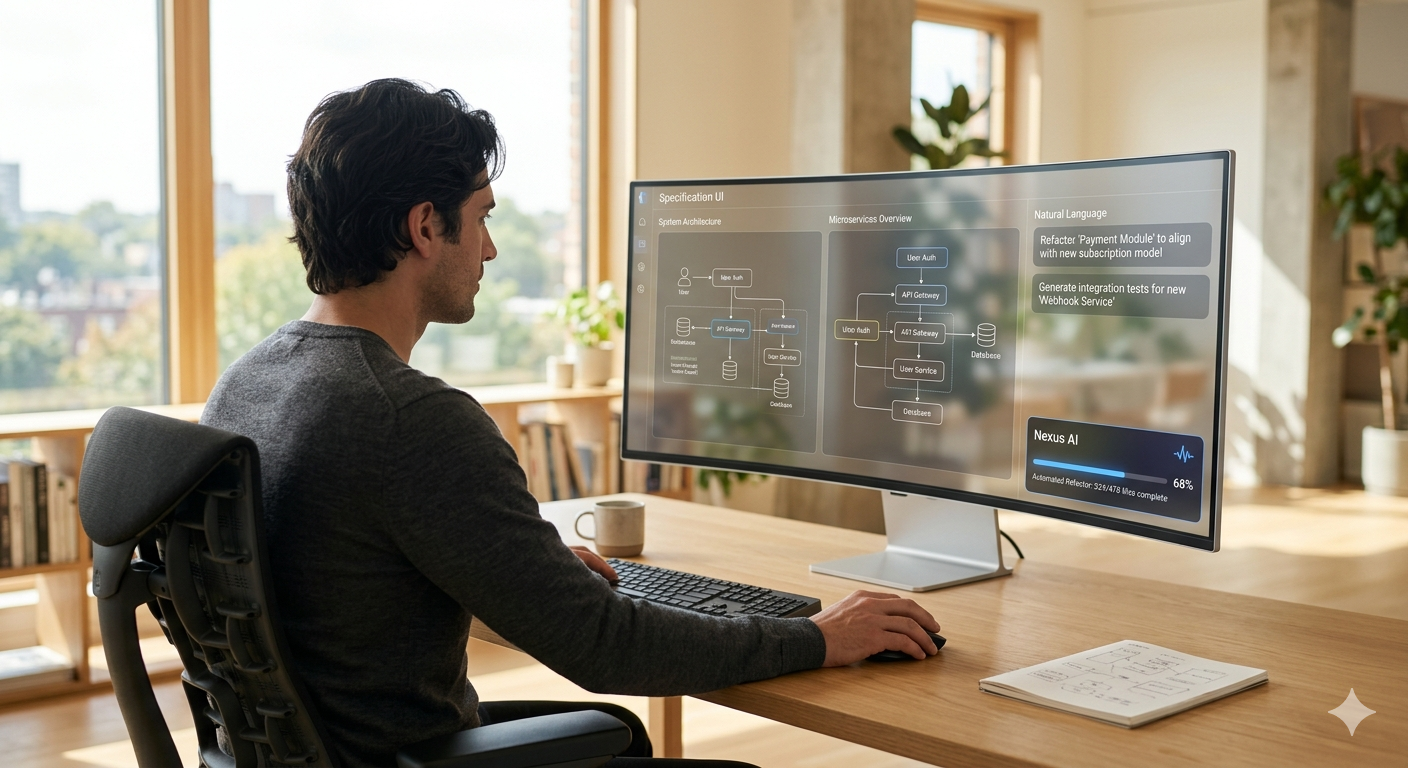
Explore the transition from traditional IDEs to autonomous coding agents and how AI is redefining...

Reverse Engineering the AI Recruiter
Learn how to optimize your resume and application process by understanding the logic behind AI...
Ready to Build Something Amazing?
Let's collaborate on your next project and create solutions that make a difference.
Get In Touch