
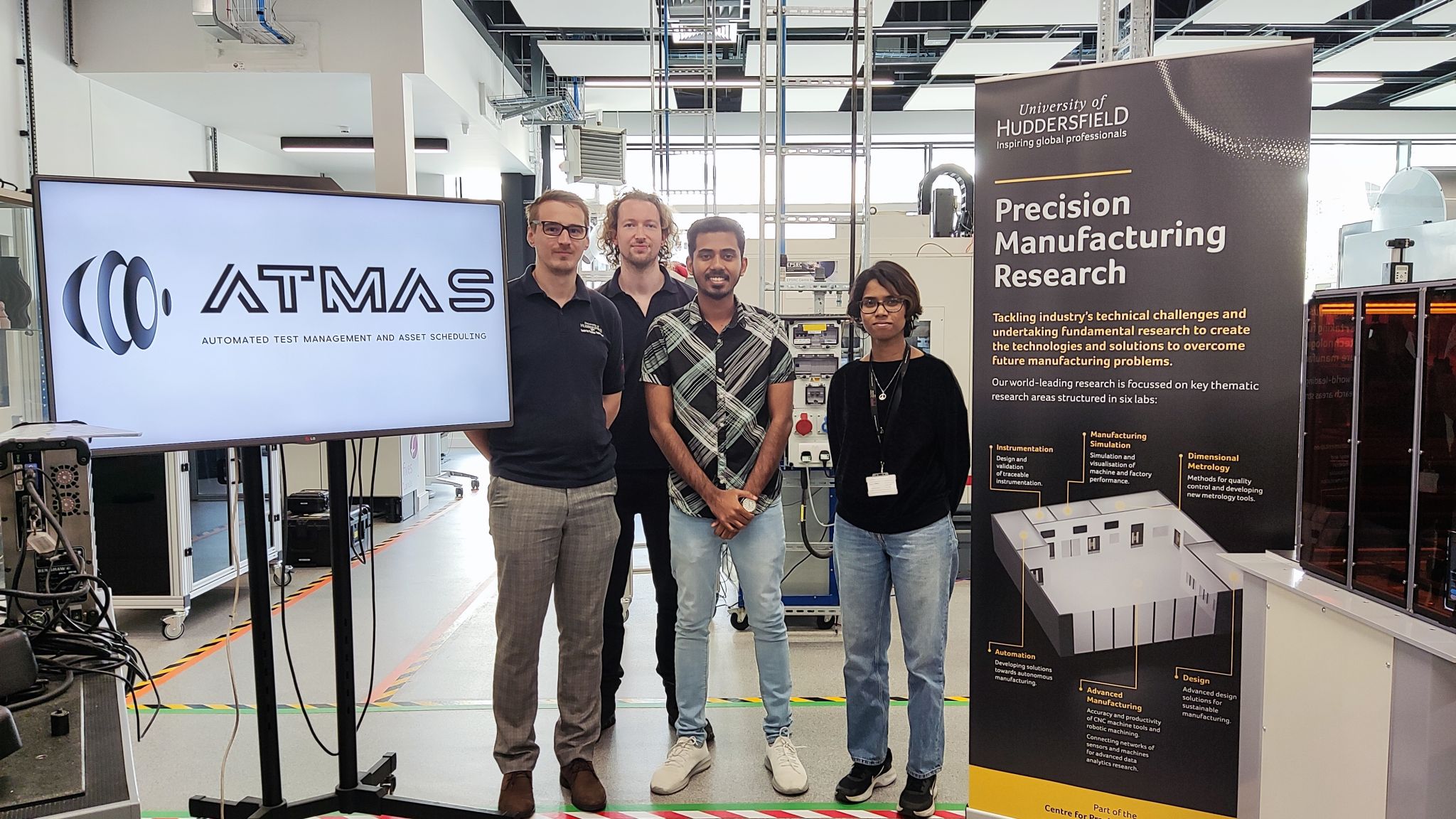
The Automated Test Management and Asset Scheduling System (ATMAS)

Gulger Mallik
Software Engineer & AI Researcher
Explore the development, architecture, and achievements of the Automated Test Management and Asset Scheduling System (ATMAS) deployed at the University of Hudde
The Automated Test Management and Asset Scheduling System (ATMAS): Optimizing Precision Manufacturing Resources
In the landscape of advanced manufacturing and research facilities, the efficient management of specialized assets and complex testing schedules is paramount to productivity and successful project delivery. The Automated Test Management and Asset Scheduling System (ATMAS) was conceived precisely to address these logistical demands. Developed to be a scalable, robust solution, ATMAS streamlines the often-cumbersome processes of resource allocation and operational oversight. Its successful deployment within the University of Huddersfield’s Centre for Precision Technology (CPT) group serves as a prime example of how tailored software solutions can revolutionize facility management in high-tech environments.
System Overview and Context
ATMAS is fundamentally designed to serve as the central hub for coordinating physical assets—such as specialized machinery, testing rigs, and laboratory equipment—and the associated test schedules required by researchers and engineers. The system's core objective is to maximize asset utilization while minimizing scheduling conflicts and downtime. Its architecture was built with scalability in mind, anticipating the dynamic nature of academic and industrial research where project requirements and asset inventories are constantly evolving.
Deployment at the Centre for Precision Technology (CPT)
The University of Huddersfield’s CPT group, focused on cutting-edge research in areas like metrology, advanced manufacturing processes, and smart systems, provided the ideal proving ground for ATMAS. Such centers often handle a diverse array of sophisticated, expensive equipment that cannot afford inefficient scheduling. By centralizing control through ATMAS, the CPT team gained a transparent, auditable, and predictable method for booking and tracking asset usage across multiple concurrent research projects.
Key Development Challenges
The journey from concept to a fully operational system presented several significant engineering and usability hurdles that required careful architectural planning and execution.
Data Integrity and Security
In any system managing critical operational data—like asset maintenance logs, calibration records, and proprietary test parameters—maintaining absolute data integrity is non-negotiable. Furthermore, ensuring the security of this information against unauthorized access or modification was a primary concern, especially within an academic setting where data access levels vary widely among students, researchers, and external collaborators.
Integration of Disparate Functionalities
The complexity of ATMAS lay not just in managing schedules but in seamlessly integrating asset tracking (knowing where an asset is and its current status) with the scheduling module (determining when it can be used). Creating a unified, uninterrupted workflow between these distinct but related functions required careful design to prevent data silos or synchronization errors.
Real-Time Performance and Concurrency
Manufacturing and research environments often involve high concurrency—multiple users attempting to view or modify schedules simultaneously. ATMAS needed to process these requests in real-time, ensuring that booking conflicts were instantly flagged and resolved, which placed significant demands on the underlying database management system to handle concurrent read/write operations reliably without data corruption.
Balancing Usability and Power
A final, crucial challenge was the user interface (UI) design. The system needed to be powerful enough for senior technicians to manage complex resource dependencies, yet intuitive enough for new students to book a simple time slot without extensive training. Achieving this balance between feature richness and ease of use required extensive user experience (UX) consideration.
Architectural Solutions and Implementation Strategy
The development team employed established software engineering principles and modern web technologies to overcome the identified challenges, resulting in a stable and efficient platform.
Model-View-Controller (MVC) Architecture
ATMAS utilizes the Model-View-Controller (MVC) architectural pattern. This choice provided inherent separation of concerns, which is vital for maintainability and complexity management:
- Model: Responsible for the data layer, managing asset records, scheduling logic, and enforcing business rules.
- View: Handled the presentation layer, built using standard web technologies to ensure cross-platform accessibility.
- Controller: Acted as the intermediary, processing user input from the View and updating the Model, thereby decoupling the interface from the core logic.
Database Selection: MySQL
For the persistent storage of asset inventories, user credentials, and complex temporal scheduling data, MySQL was selected. Its reputation for reliability, transactional integrity (crucial for preventing booking errors), and strong performance under moderate load made it an ideal backend choice for ATMAS.
Front-End Responsiveness with AJAX
To tackle the need for real-time updates without forcing users to constantly refresh the page, ATMAS heavily leveraged Asynchronous JavaScript and XML (AJAX) techniques. This allowed the front end (built with JavaScript and HTML) to communicate with the server in the background, fetching immediate status changes or updating a booking instantly. This asynchronous communication was key to delivering a fluid, modern user experience expected in professional scheduling tools.
Agile Development Methodology
The iterative nature of Agile development proved highly beneficial. By developing ATMAS in short cycles, the team could frequently integrate feedback directly from the CPT staff who would ultimately use the system. This continuous loop of development, testing, and refinement ensured that the final product was tightly aligned with the practical operational requirements of the facility, addressing usability concerns early in the process.
Tangible Achievements and Operational Impact
The implementation of ATMAS has moved the Centre for Precision Technology beyond reliance on manual booking sheets, email chains, or disparate spreadsheets. The quantitative and qualitative improvements have been substantial, validating the significant investment in its development.
Efficiency Gains in Resource Allocation
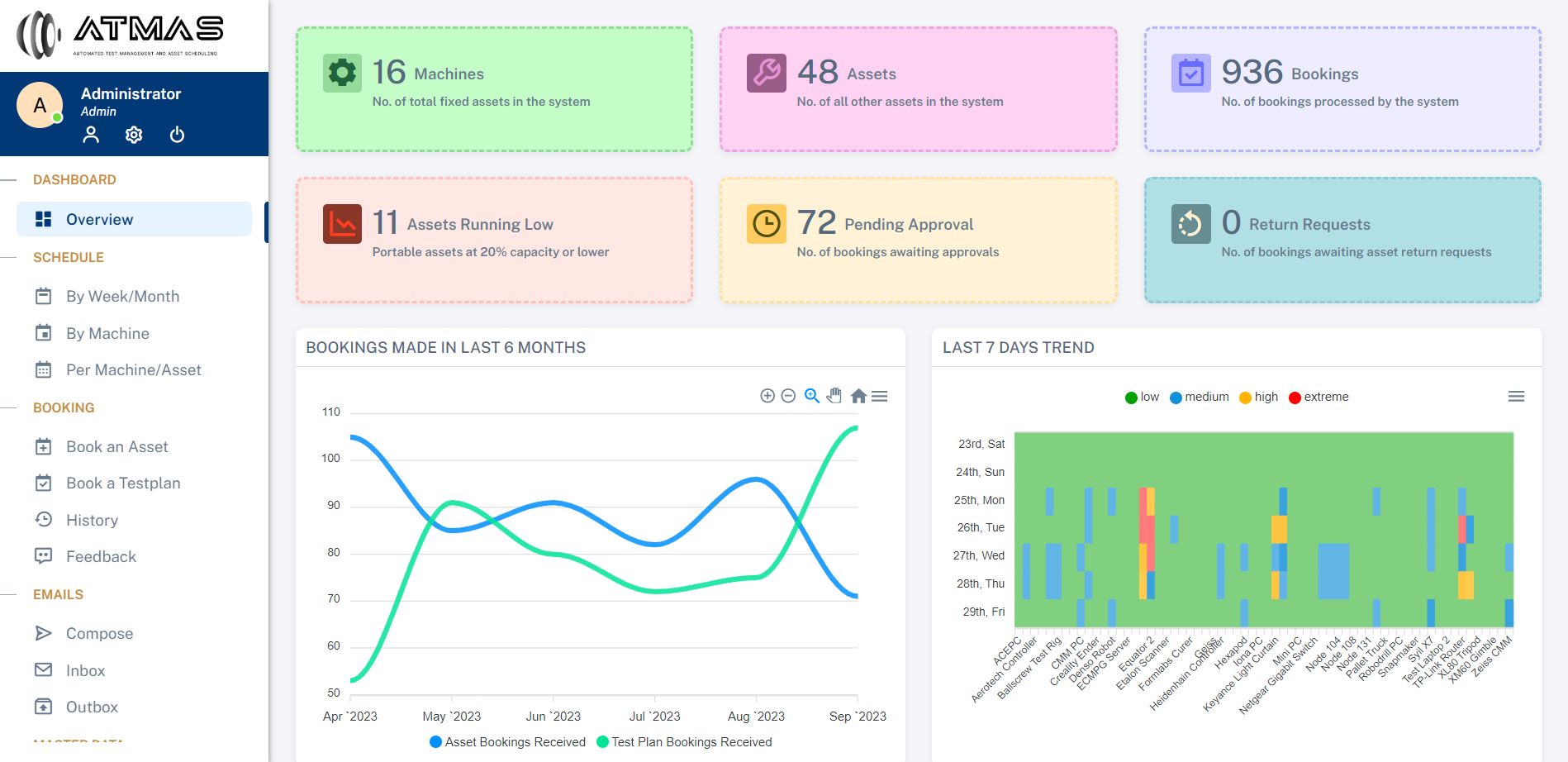
The primary achievement is the marked increase in scheduling efficiency. By providing a single source of truth for asset availability, ATMAS has drastically reduced the time researchers spend coordinating access. This minimization of administrative overhead allows technical staff to focus more on core research activities rather than logistical management. Furthermore, the system ensures that high-value assets are utilized closer to their theoretical maximum capacity.
Enhanced Data Visibility and Auditing
The robust MySQL backend allows for comprehensive reporting on asset usage patterns, maintenance history, and utilization rates. This historical data is invaluable for strategic planning, justifying future equipment purchases, and ensuring compliance with internal quality control standards. The traceability provided by ATMAS ensures that every minute of asset usage is accurately logged and attributed.
ATMAS has successfully transformed scheduling from a reactive bottleneck into a proactive, optimized function within the CPT environment.
System Maturity and Operational Status
Crucially, the development phase of ATMAS is considered complete. The system is fully operational and integrated into the daily workflow at the University of Huddersfield’s CPT. This completion signifies that the architecture is stable, all core functionalities have been successfully deployed, and the system is meeting its intended performance metrics without requiring immediate, foundational enhancements. While all software systems allow for potential future feature additions, the current state of ATMAS confirms its readiness as a mature, reliable operational tool.
Conclusion
The Automated Test Management and Asset Scheduling System stands as a successful case study in applying structured software development principles—MVC architecture, robust database management, and user-centric design via Agile methods—to solve real-world operational challenges in advanced technology centers. By effectively managing complex scheduling and asset tracking, ATMAS has provided the Centre for Precision Technology with a significant competitive advantage in research efficiency and resource utilization.
Related Articles

Chaos of Traditional Job Hunting
Discover how an AI-powered Job Application Tracker transformed my job search, streamlining...

Visualizing Strategic Positioning
Discover how a custom React and ApexCharts app visualizes strategic differentiation using Blue...

The Value of Alumni Engagement in Career Development
Reflecting on the rewarding experience of serving as an Alumni Panelist, sharing professional...
How I used Google's Antigravity AI Tool
Explore the reality of Google's Antigravity AI tool. Discover how this powerful technology...

Building the Digital Backbone for Soil Carbon Innovation
Explore the three core technological assets powering the Tierrasphere initiative: the internal...
Ready to Build Something Amazing?
Let's collaborate on your next project and create solutions that make a difference.
Get In Touch